
Businesses today are investing more than ever in digital products. From mobile apps and SaaS platforms to enterprise systems, software has become a key driver of growth, efficiency, and customer experience. For many companies, the right software can open new revenue opportunities, streamline operations, and support long-term scalability.
But before starting any project, one question almost always comes up: how much does software development cost? The reality is that software development costs can vary widely depending on several factors. A simple MVP built to test an idea will cost far less than a large enterprise platform with complex integrations, advanced security, and thousands of users.
This is why understanding the software development cost breakdown is essential. When you know what affects pricing, you can plan your software project cost estimation more accurately, avoid unexpected expenses, and make smarter investment decisions.
In this guide, we’ll break down the key factors that influence the cost to build software for business and what companies should realistically expect when planning software development in 2026.
First, let’s check out:
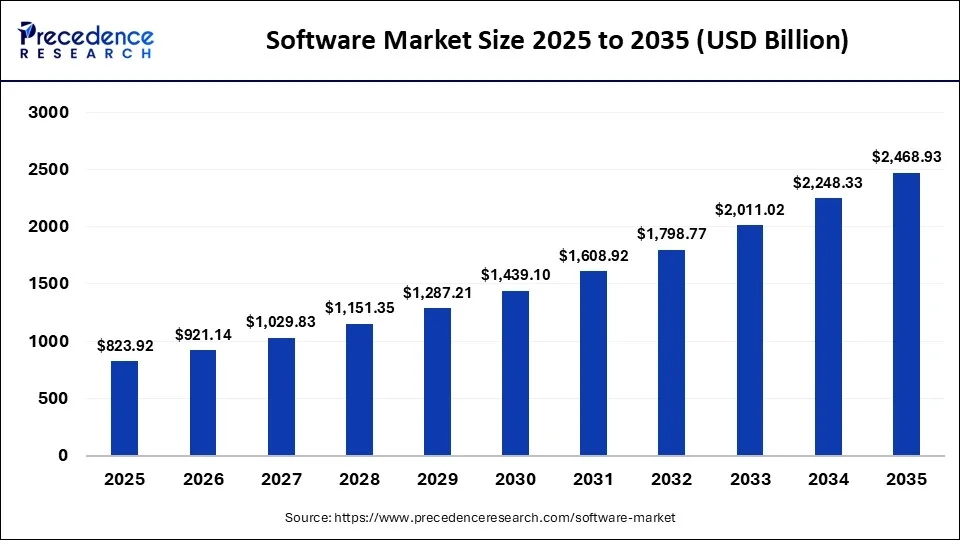
The global software market was valued at USD 823.92 billion in 2025 and is expected to grow to USD 921.14 billion in 2026. By 2035, the market is projected to reach USD 2,468.93 billion, expanding at a CAGR of 11.60% from 2026 to 2035, driven by increasing digital transformation and demand for advanced software solutions.
Key Highlights
When businesses ask me how much software development costs, the honest answer is: it depends on what you’re building and how complex it is. The scope of the project, the number of features, and the level of customization all play a major role in determining the final investment.
To give you a clearer idea, here is a general software development cost estimate most businesses can expect.
Here is a general software development cost estimate businesses can expect:
| Project Type | Estimated Cost |
|---|---|
| Simple application or MVP | $15,000 – $30,000 |
| Mid-level software platform | $30,000 – $50,000 |
| Complex enterprise software | $50,000 – $150,000+ |
If you are a startup founder or launching a new product, we usually recommend starting with a minimum viable product (MVP). This approach allows you to build only the essential features first, launch faster, and see how real users respond. It is one of the most practical ways to validate your idea while keeping the cost of building software for business under control.
If you are running an established company, your needs are usually different. Enterprise platforms often require deeper integrations with existing systems, stronger security frameworks, and infrastructure that can scale as your business grows. Because of that, the software development cost tends to be higher, but it also supports long-term reliability and expansion.
Now let’s take a look at the factors that actually affect the software development cost in 2026.
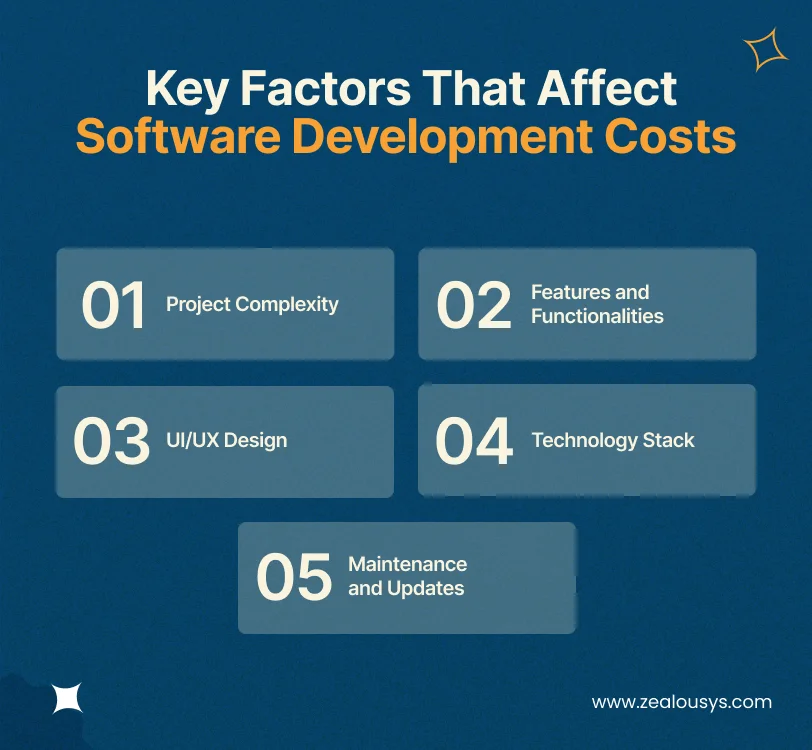
When businesses plan a software project, one of the most important things to understand is what actually drives the cost. The cost of custom software development is not based on a single factor. Instead, it is shaped by multiple elements that influence the scope, timeline, and technical effort required.
Let’s walk through the key factors that typically impact software development pricing.
Project complexity is often the biggest factor in determining the software development cost. A simple application with basic functionality is naturally faster and cheaper to build. But as the architecture becomes more advanced, the effort required increases significantly. Platforms that include complex systems or advanced technologies require deeper planning, specialized development skills, and longer development timelines.
For example, projects that involve features such as:
It will naturally require more development effort. As the technical architecture becomes more complex, the software project cost estimation increases accordingly.
The number and type of features included in a product also play a major role in the custom software development cost. Each feature requires design, development, testing, and integration. As features increase, so does the total development time.
Common features that impact the software development cost estimate include:
While these features add significant value to the product, they also increase development effort and overall software development pricing.
User experience is another factor that directly affects the cost of custom software development. Modern software products are expected to be intuitive, visually appealing, and easy to navigate. Creating interactive dashboards, responsive layouts, and seamless user journeys requires the expertise of skilled UI/UX designers.
Although design adds to the development investment, it plays a critical role in improving product usability, engagement, and long-term adoption.
The technologies used to build the software also influence software development cost per hour and overall project pricing.
Different programming languages, frameworks, and cloud infrastructures require developers with specific expertise. When projects involve emerging technologies such as AI, blockchain, or IoT, companies often need specialized developers, which can increase the cost to hire software developers.
Choosing the right technology stack is therefore an important part of balancing performance, scalability, and development cost.
Software development does not end once the product is launched. Ongoing maintenance is essential to keep the system secure, efficient, and aligned with evolving user needs.
Typical post-launch activities include:
Most businesses allocate around 15–25% of the initial software development cost annually for maintenance and updates. Planning for this early helps ensure long-term software stability and performance.
When planning a software project, one of the most helpful things you can do is understand the typical cost range for the type of product you want to build. Different types of software require different levels of effort, expertise, and development time.
Knowing these ranges helps you plan your budget more realistically, prioritize the right features, and avoid surprises during development. Below is a breakdown of common project types and what you can generally expect in terms of software development cost in 2026.
If you’re planning to build a basic web application, the development cost usually falls between $15,000 and $50,000, and the project typically takes around 2 to 6 months to complete.
At this stage, the goal is usually to launch a Minimum Viable Product (MVP). Instead of building a fully advanced platform right away, you focus on the core functionality that allows you to test your idea in the market.
Most basic web apps include features such as:
If you’re a startup founder or testing a new product idea, this approach allows you to launch faster while keeping the cost to build software for business under control.
If your goal is to reach users on mobile devices, a cross-platform mobile app is often a practical choice. These apps usually cost between $15,000 and $150,000, depending on the level of complexity and the number of features included. Development typically takes 3 to 9 months.
Cross-platform apps are designed to run on both iOS and Android using technologies such as Flutter or React Native. This means you can launch on both platforms without building two completely separate apps, which helps optimize software development pricing.
In most cases, these apps include features like:
If you want to reach a wider audience quickly, this approach helps reduce development time and overall software development cost.
If you’re building a product that customers will subscribe to and use online, you’re likely looking at developing a custom SaaS platform. These projects are larger in scope and usually cost between $30,000 and $200,000, with development timelines ranging from 6 to 12 months.
SaaS platforms are designed to support multiple customers on the same system while keeping their data secure and separate. Because of this, the architecture needs to be scalable and carefully designed.
Typical SaaS platforms include features such as:
Many businesses choose SaaS because it allows them to build recurring revenue models while continuously improving the product over time.
If you are building software for a large organization, the project usually falls into the enterprise software category. These systems are the most complex and typically cost between $50,000 and $200,000 or more. Development timelines can range from 9 to 24 months.
Enterprise platforms are built to handle large amounts of data, multiple integrations, and strict security requirements.
These systems often include capabilities such as:
Because enterprise software often needs to connect with existing business systems and support thousands of users, these projects require deeper planning, stronger infrastructure, and a longer development cycle.
If you’re planning to build software, one factor that significantly influences the software development cost is the hourly rate of developers. These rates vary widely across the world, mainly due to differences in the cost of living, availability of skilled talent, and the maturity of local tech ecosystems.
Understanding these regional differences can help you make smarter decisions when hiring developers and planning your software development budget.
North America, particularly the United States and Canada, has some of the highest software developer hourly rates in the world. This is largely due to the region’s mature technology industry, strong product expertise, and high operational costs.
Typically, developer rates fall within the following ranges:
Many companies choose North American developers when they require deep product experience, close collaboration, and highly specialized technical expertise.
Countries such as Germany, the United Kingdom, and France also offer highly skilled developers and well-established technology ecosystems. While rates are slightly lower than those in North America, they are still considered relatively high compared to other regions.
Average hourly rates generally include:
Businesses often choose Western Europe for its strong engineering standards, stable business environments, and experienced development teams.
Over the past decade, Eastern Europe has become one of the most popular outsourcing destinations for software development. Countries such as Poland, Ukraine, and Romania offer strong technical talent with competitive pricing.
Typical hourly rates include:
Many companies find this region appealing because it offers a balance between cost efficiency and high technical expertise.
Asia remains one of the most cost-effective regions for software development, especially for businesses looking to optimize their development budgets. Countries such as India, Vietnam, and the Philippines have large pools of skilled developers and well-established outsourcing industries.
Common hourly rates in this region are:
For many startups and growing companies, outsourcing to Asia helps reduce the cost of custom software development while still providing access to experienced development teams.
Latin America has also become an attractive destination for nearshore software development, particularly for companies based in North America. The region offers competitive rates along with the advantage of similar time zones for easier collaboration.
Typical hourly rates include:
Because of the time zone alignment and cultural proximity, many U.S. businesses find it easier to collaborate with teams in this region.
While hourly rates are an important factor in software development pricing, cost alone should not be the only consideration. Businesses often evaluate multiple factors before choosing a development partner, including:
Balancing cost with quality and reliability is usually the key to building successful and sustainable software projects.
| Region | Junior Developer ($/hr) | Mid-Level Developer ($/hr) | Senior Developer ($/hr) |
|---|---|---|---|
| North America (USA, Canada) | $50 – $80 | $80 – $120 | $120 – $200+ |
| Western Europe (UK, Germany, France) | $40 – $70 | $70 – $100 | $100 – $150+ |
| Eastern Europe (Poland, Ukraine, Romania) | $25 – $50 | $50 – $80 | $80 – $120 |
| Asia (India, Vietnam, Philippines) | $12 – $30 | $30 – $60 | $60 – $100 |
| Latin America (Brazil, Argentina, Mexico) | $20 – $40 | $40 – $70 | $70 – $110 |
When planning a software project, one of the biggest decisions you will need to make is how you want to build your development team. The model you choose can significantly impact the overall software development cost, project timeline, and flexibility.
Most businesses typically choose between three common models: in-house development, outsourced development, or offshore development. Each option has its own advantages and challenges.
With the in-house development model, a company hires its own internal team of developers, designers, and project managers to build and maintain the software.
This approach gives organizations a high level of control over the development process and makes day-to-day collaboration easier.
Pros
Cons
Because of these factors, in-house development is often the most expensive option when calculating the cost to hire software developers, especially for startups or companies building their first product.
With outsourced development, companies partner with an external software development firm that builds the product on their behalf.
This model allows businesses to access experienced development teams without having to hire and manage every role internally.
Pros
Cons
For many businesses, outsourcing offers a practical balance between cost efficiency and access to skilled development resources.
Offshore development is a form of outsourcing where companies partner with development teams located in other countries, often in regions with lower operational costs.
This model has become increasingly popular as businesses look for ways to reduce the cost of custom software development while still maintaining quality.
Pros
Because of these advantages, offshore development has become a preferred model for many startups, SaaS companies, and enterprises that want to build high-quality software while keeping development costs under control.
In many cases, businesses choose offshore teams not just for cost savings, but also for their ability to provide flexible, scalable development support for long-term projects.
Many companies today choose offshore software development to balance quality with cost efficiency. Building software requires significant investment, and offshore teams help businesses reduce the cost of custom software development while still accessing skilled talent.
Here are some of the main reasons businesses prefer this model.
One of the biggest advantages of offshore development is cost savings. Companies can reduce the software development cost per hour by 60–70% compared to hiring developers in high-cost regions. This allows businesses to build high-quality software while managing their budgets more effectively.
Offshore locations such as India provide access to large pools of experienced software engineers across multiple technologies. This makes it easier for businesses to find the expertise they need without long hiring timelines.
Another benefit of offshore development teams is it can scale quickly, which helps businesses start projects faster and accelerate product development. This flexibility is especially valuable for startups and companies working with tight timelines.
One more key advantage of an offshore development team is flexibility. Businesses can choose different engagement models based on their project needs, such as:
These options help companies manage resources better and maintain better control over their software project cost estimation.
Managing software development cost effectively often comes down to choosing the right development partner. At Zealous System, we work closely with businesses to build scalable and reliable digital products while helping them maintain a clear and predictable software development cost estimate. Our goal is to help companies turn their ideas into practical software solutions without unnecessary complexity or inflated budgets.
With experience working with startups, SaaS companies, and enterprises, we focus on delivering high-quality solutions while optimizing the cost of custom software development. By combining skilled developers, modern technologies, and flexible engagement models, we help businesses control the cost to build software for business while ensuring their products remain scalable, efficient, and ready for long-term growth.
When you start planning a new product, one of the biggest questions on your mind is the software development cost. And rightly so. Building software is not just a technical decision; it’s a business investment. The clearer you are about the cost of custom software development, the easier it becomes to make the right decisions about features, technologies, and the team you need.
Today, you also have more options than ever. By exploring models like outsourcing or offshore development, you can significantly reduce the software development cost per hour while still getting access to experienced developers. When you evaluate key custom software pricing factors early and plan your software project cost estimation carefully, you put yourself in a much stronger position to build scalable software that grows with your business.
And if any part of this process feels unclear, you don’t have to figure it out alone. At Zealous System, our experts work closely with businesses to assist them in understanding the cost to build software for business, choosing the right development model, and moving forward with confidence. Sometimes, the right conversation with the right team can save you months of confusion and a significant amount of development cost.
Our team is always eager to know what you are looking for. Drop them a Hi!

I am currently working as a business analyst at Zealous System. I am experienced in working with stakeholders and managing project requirements, Documentation of requirements, and planning of product backlog.




Comments